61° and Clear



Image
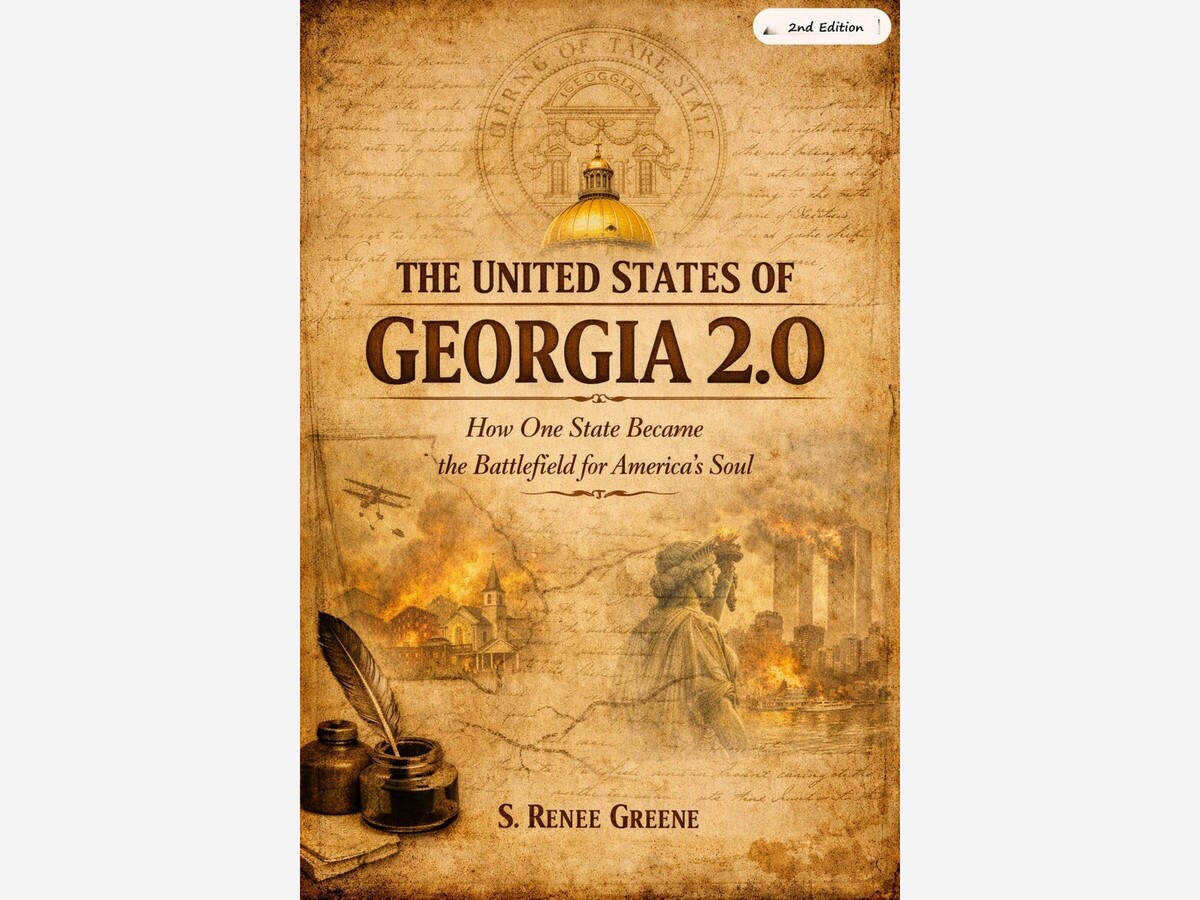
It is a place where the country rehearses its promises, breaks them, and tries again. A place where the land remembers what people forget.
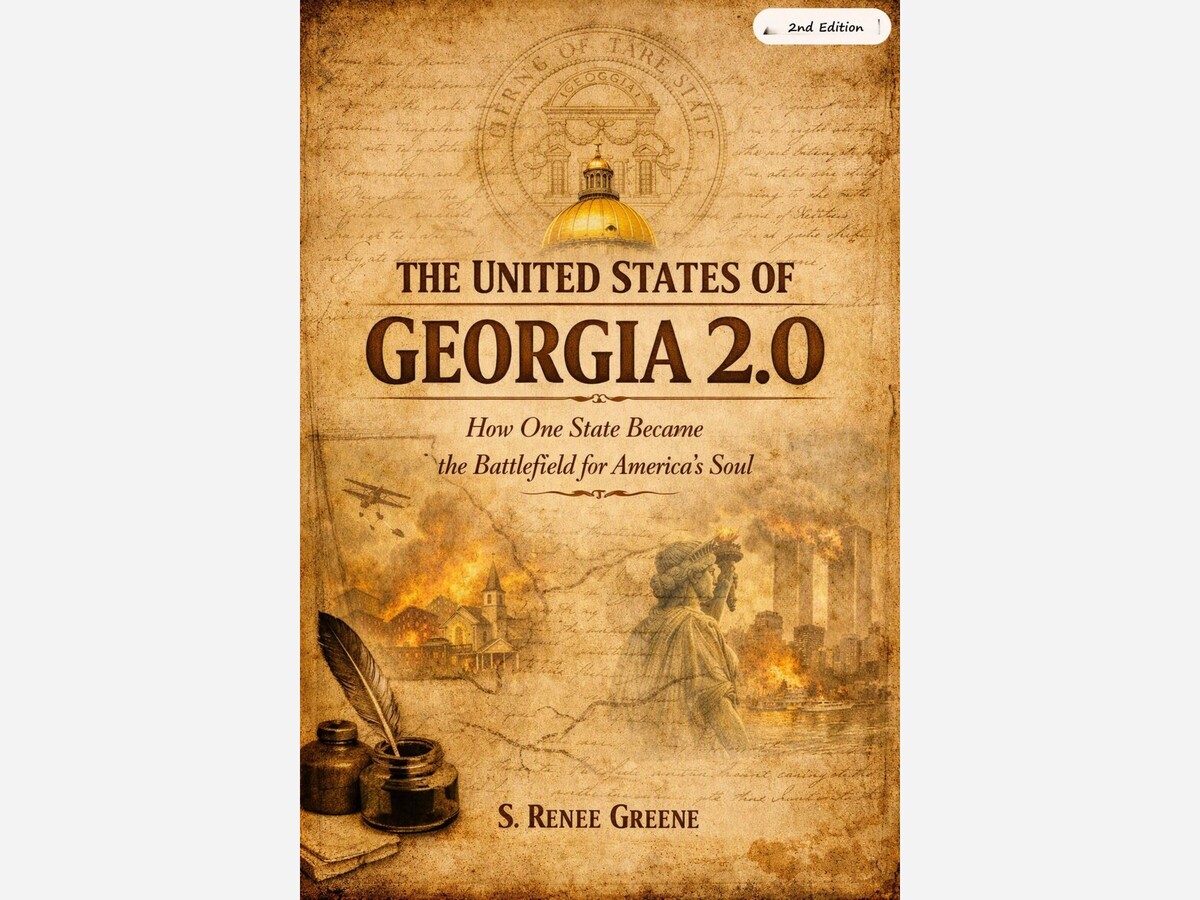
In The United States of Georgia 2.0, this story is traced through soil and statute, through the hands that built the state and the systems that tried to contain them. What emerges is not simply a record of what happened here, but a map of what is happening now — and what is coming.
The original 2008 edition of The United States of Georgia carried a simple but unflinching truth: that Georgia was living in a moment when history and hope collided, and the collision revealed more than the celebration ever did.
Its core argument — the “meat” of that first book — was that the Civil Rights Movement had been moemtarily interrupted rather than completed, and that the machinery beneath the red clay had only changed its shape.
The promise of "United States" that many believed had arrived in 2008 was built on foundations the state had never repaired.
It was a witness statement about a covenant broken economically, spiritually, and culturally, and a warning that without repentance, Georgia would repeat its own patterns.
In 2016, it did just that.
The same patterns political scientists now use to measure democratic decline have lived in Georgia for generations, long before anyone spoke of 'erosion indicators'. Georgia had already shown them: the removal of the Muskogee-Creek nations, and more; the plantation economy, the legal scaffolding that built Jim Crow, the unfinished work of the Civil Rights Movement, and the rise of a digitized color line that sorts people without ever touching them.
Each chapter of Georgia’s past is an early version of the pressures the nation now feels.
When America expands rights, Georgia reveals whether those rights can survive contact with culture. When America retreats from justice, Georgia shows the cost of that retreat. When America modernizes its institutions without repairing its wounds, Georgia demonstrates how progress without repentance becomes a counterfeit progress.
Today, the same forces that shaped Georgia’s red clay/Chattahoochee/Piedmont foothills plains are shaping its future.
Voting access is contested. Schools are battlegrounds. Courts and police carry political weight they weren't meant to hold.
Digital platforms have become the new frontier of racial sorting and political manipulation. The color line, once described in full by the illustrious W.E.B. DuBois, has not disappeared; it has simply changed its tools.
Here's how....
1. It repairs the book’s rhythm.
The new Chapter 7 sits precisely at the betrayal → awakening hinge. It becomes the moment where the reader realizes that Georgia’s story is not just historical but ongoing, not just emotional but structural.
2. It becomes the book’s spiritual and cultural spine
This matters because:
The new version makes the book’s argument more coherent than before.
3. It bridges the historical chapters to the modern ones
The revised Chapter 7 is the bridge between them. It explains why the past keeps repeating:
“Because the machinery beneath the red clay was never dismantled — only updated.”
4. It aligns perfectly with democratic‑erosion indicators.
As U.S. democracy erodes and the State of Georgia leads the way to its decline, the new Chapter 7 now mirrors the exact indicators political scientists use to measure democratic decline:
5. It sets up the book’s prediction of Georgia’s future
It showsa continuation of covenant struggles:
6. It deepens the covenant themes:
Georgia’s covenant was broken economically and spiritually, not just morally, not just politically, and not just racially.
7. It strengthens the emotional spine
Georgia’s past explains its present and current presence, and Georgia’s present presence predicts its future, and its future depends on its courage to sustain a democracy over a short-sighted autocracy.
It shows how unfinished reform becomes fertile ground for authoritarian grift, how demographic change invites cultural backlash, and how institutions under pressure begin to bend toward those who apply it.
It argues that Georgia’s democratic future will depend not on policy alone, but on whether the state confronts the covenant it has repeatedly broken — and whether it chooses courage over comfort when the next test arrives.
Georgia is not simply a Southern state. It is a measure. A warning. A possibility.
And the story written in its red clay, its pine-treed landscape and its river city montage now sitting on the very soil where the first of this nation's slaves began their long trek to the future is the story that the United States of America will have to face in the future.
1. State power over local election boards
Georgia has passed laws allowing the state legislature — through the State Election Board — to take over county election boards if they claim “poor performance.”
This matters because:
This shift is one of the clearest indicators of democratic erosion: centralizing election control in partisan hands.
2. Restrictions on voting access
Georgia’s 2021 voting law (SB 202) introduced:
Freedom House and the Movement Advancement Project classify these changes as reductions in democratic access, especially affecting:
3. Criminalization of routine election work
Georgia has added new criminal penalties for administrative mistakes, procedural errors, and misunderstandings of complex rules. The "Fear Factor" rules Georgia politics, and the fear is not that they are doing something wrong, the but that following the voting laws is not an option if it does not play out in Donald Trump's personal favor.
Election workers report fear of prosecution, which leads to resignations, registrar shortages, and reduced and reduced institutional capacity. When election workers are intimidated or driven out, the system becomes more vulnerable to partisan manipulation.
4. Pressure on certification and election officials
After 2020, Georgia saw attempts to pressure local officials not to certify results, threats against election workers, public campaigns to remove or replace county officials, and legislative hearings amplifying false fraud claims.
The 2008 book states that all this would come to pass if the USA did not get the hint that Barack H. Obama's election was a warning to the rest of the country is to get on task and disband the racism before the nation fall aparts at its 400-year old cracks.
5. Extreme partisan gerrymandering
Federal courts have repeatedly ruled that Georgia’s legislative maps dilute Black voting power.
The state has been ordered to redraw maps multiple times.
Gerrymandering is a structural form of democratic erosion because it:
Georgia’s maps are among the most litigated in the country.
6. Racialized political geography
Georgia’s erosion is inseparable from its racial history.
The Movement Advancement Project notes that democratic decline in the U.S. is most severe in states with large Black populations, especially in the Deep South.
Georgia fits this pattern because:
This creates a cycle where political actors respond to demographic change with restrictive laws. Georgia’s racial history and politics are inseparable — each era of the state’s development has been shaped by race, and those legacies still structure political power today.
7. Rapid partisan realignment
Georgia is one of the fastest‑changing states politically.
Rapid change creates institutional stress due to close elections, intense national attention, high misinformation pressure and polarized media ecosystems.
Georgia is not just any state — it’s a national battleground with a large Black electorate, many fast‑growing suburbs along with sharply contrasting rural‑urban divides, intense partisan competition, deep historical racial conflict, and a major national political influence.
When I was younger, I used to say Georgia is the cornerstone ("hotbed") of the seat of racism across the nation and around the world, and one man said to me "The United States of Georgia," and I took to that and adapted it as a title.
This makes Georgia a stress test for American democracy. When Georgia’s institutions weaken, it signals broader national vulnerability.
 https://www.lulu.com/shop/s-renee-greene/the-united-states-of-georgia-2…
So...we have only one question left to ask, considering Donald Trump's earlier attempt in 2020 to have the Georgia election turned over to him even after he lost by more than 11,000 voters ...
-30-





Sunny, with a high of 88 and low of 61 degrees. Sunny for the morning, clear in the afternoon and evening,









I just wanted to clarify that District Judge Richard Leon was in fact the first to tell tRump that he is a "steward"of the White House not the owner. And to treat it as such.