Image
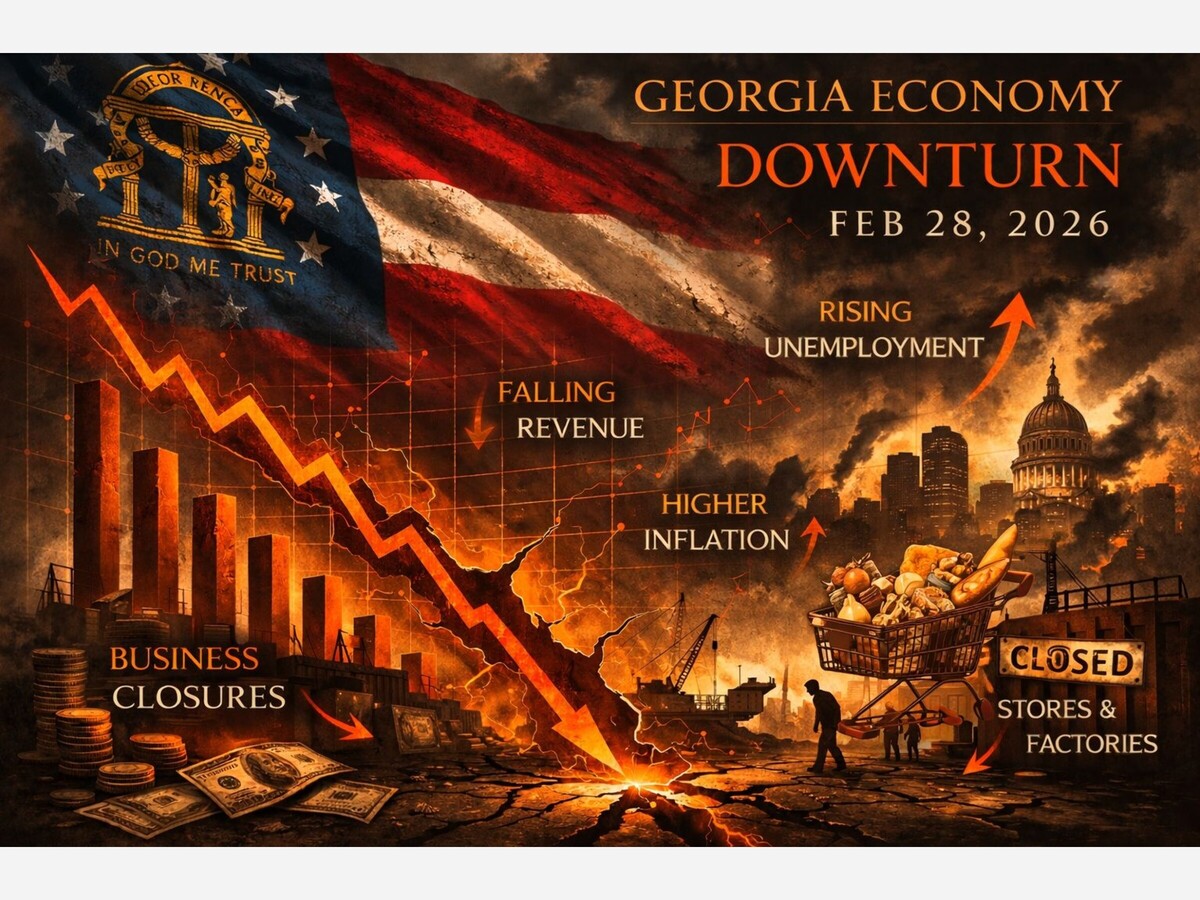
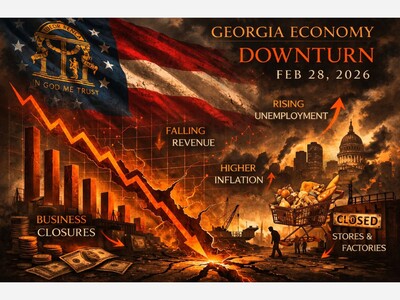
Black Economics in Georgia Stay on a Downturn. This isn't sometimes for us, this is all day every day 24/7 per day. What suprises others is the course of the day for Black Georgians.



The central argument is pretty straightforward.
The video argues that something has shifted in Black America's political response: rather than automatically becoming the country's front-line protesters whenever a national crisis develops, many Black Americans are deliberately sitting this one out.
The speakers repeatedly make essentially the same point: we warned you; you voted; now you deal with the consequences.
They argue that Black Americans recognized the dangers they saw in the country's political direction—including Project 2025—before many other Americans felt personally threatened by them.
We saw it coming, because we remained segregated and taken subject to it the whole time people were lying that we were "free," when we weren't. NOT FREE LIKE THAT, we weren't.
Now that economic pressure, government cuts, threats to education and healthcare, tariffs, job losses, and other consequences are reaching broader portions of the population, the speakers reject the expectation that Black Americans should once again lead the resistance.
We're not about to do that. The ancestors have told us to hang back and let what is supposed to come, come.
The video isn't really about the cost of living, despite the title. It's about resilience and political withdrawal.
Several speakers argue that Black Americans have lived with poorly funded schools, food deserts, economic insecurity, discrimination and inadequate public systems for generations. Consequently, hardship that feels newly destabilizing to some Americans isn't psychologically new to many Black communities:
...essentially, we already know how to survive this; we're not used to being included anyway...
That's why the host interprets Black people continuing to live, laugh, dance, work and enjoy themselves—not as evidence that they aren't suffering—but as evidence that they've developed ways of functioning under adversity.
This is what racism pays the price for.
One speaker gives the video's most substantive historical explanation.
She connects the present situation to Reconstruction, Jim Crow and the New Deal, arguing that American elites repeatedly prevented poor Black and white Americans from forming durable economic coalitions by offering white Americans racial status in place of shared economic advancement. She then argues that New Deal benefits similarly advantaged many white workers while exclusions affecting agricultural and domestic labor disproportionately excluded Black workers.
Her conclusion is basically:
Americans tolerated unequal systems when they believed those systems would primarily hurt somebody else. Now some of those same governmental mechanisms are hurting them.
And she reduces that whole argument to one particularly strong idea:
“Their proximity to it” changed.
In other words, according to the speaker, the policy problem didn't suddenly become objectionable; the people experiencing its consequences changed.
Some speakers go considerably farther than that argument.
There are claims about the government deliberately trying to provoke Black Americans into protesting as a pretext for martial law, sweeping racial generalizations, predictions of societal collapse, and rhetoric about white Americans needing Black Americans to “save” them. Those are presented as opinions/assertions in the video, not demonstrated evidence.
There is also a lengthy discussion of protest, resistance and violence. The speakers argue that marginalized people have historically absorbed the physical danger of protest while allies participated from relative safety. One speaker explicitly says she isn't calling for violence, but argues that meaningful protest necessarily involves disruption and willingness to face violence from the state or opposition.
Black Americans aren't necessarily unaffected by what's happening -- the video argues that many are exhausted with being expected to rescue a country from consequences they warned it about, and their historical experience has taught them how to endure conditions that other Americans are only now discovering.
You chose Trump over Harris, that isn't on us. We're done. It's what Malcolm X called "chickens coming home to roost." It's what MLK Jr called "I fear I've integrated my people into a burning house."
And that last part—not some of the wilder rhetoric—is actually the idea in this video that I think is worth examining. It intersects rather neatly with something you've been writing about: what happens when a system people tolerated because its burdens fell on somebody else eventually expands the pool of people carrying those burdens.
The Bottom Line: Nothing other countries do to Black people in this country in this day and age is going to impact us. Kill us? The folks here who call themselves "Americans" BEEN doing that and then adjudging themselves "innocent" afterward. We're accustomed to it,
We've been too definitively SEGREGATED for that to happen, for eons--and even Iran has made it clear that they are not after US. They know too much about what we've been through, very much EXACTLY what they are going through now. They said as much.
We understand.
###


Sunny, with a high of 89 and low of 60 degrees. Sunny in the morning, clear during the afternoon and evening,





I just wanted to clarify that District Judge Richard Leon was in fact the first to tell tRump that he is a "steward"of the White House not the owner. And to treat it as such.