Image



"Mama Said": Any time a man accuses you of cheating on him and you know damned well you are not: CHECK HIS POCKETS. [It's likely he is the one doing the cheating.]
Internal agency documents show that Homeland Security Investigations (HSI), the investigative division of ICE, has conducted a massive national operation reviewing over 99 million voter records to look for noncitizens on voter rolls.
These records naturally include private personal details and party registration information routinely collected on state voter files.
What Data is ICE Accessing?
How ICE is Acquiring the Data
The Scope of the Operation
The federal push is framed by the administration as an "election integrity" initiative to detect noncitizen voter fraud, leading to hundreds of open voter-fraud cases.
In Georgia:
As of October 9, 2026, there is a significant development concerning Georgia's voter information and Immigration and Customs Enforcement (ICE).
Georgia Secretary of State Brad Raffensperger has taken legal action to protect confidential voter information. Kemp has not announced a comparable intervention specifically addressing ICE's efforts to access or analyze Georgia voter data.
ICE has been investigating Georgia voter data
On October 7–8, newly disclosed federal records revealed that ICE officials had discussed using a data-analysis system supported by Palantir to investigate suspected illegal voting. An internal July 7 email identified Georgia as one of six states whose data had been processed by a Department of Homeland Security laboratory and was awaiting possible entry into a system called ELITE.
ELITE was developed to assist immigration enforcement investigations.
However, there are important qualifications:
Nevertheless, the documents raise substantial questions about how Georgia election information is being used by federal immigration authorities.
On September 30, 2026, Raffensperger announced that a federal judge had dismissed a Justice Department lawsuit demanding an unredacted copy of Georgia's statewide voter registration list.
The federal government had sought information that included confidential identifying details such as Social Security numbers, driver's license numbers and birth dates.
Raffensperger refused to release information protected by Georgia law. His position was unequivocal:
“I will not give in and break the law for anyone. Period.”
This was a significant legal development in the protection of Georgia voter information. But the ruling does not establish that ICE has no access to Georgia election-related information through other federal databases or arrangements.
What is Governor Kemp doing about it?
Kemp has NOT:
Georgia's secretary of state independently administers elections, so Raffensperger does not require Kemp's authorization to defend confidential voter records in court.
Georgia's voter rolls are already being checked against federal databases, so that is another development worth examining.
On September 1, Raffensperger announced that an independent audit found Georgia's voter-registration records to be 99.9% accurate under the audit's methodology. His office also reported identifying 432 potential noncitizens who had voted at some point since 1996. Those are records flagged for further examination, not proof that 432 people committed voter fraud.
Georgia has also used the federal SAVE database to review citizenship information. Consequently, Georgia's election administration already has established procedures for identifying potentially ineligible registrations.
What about a federal takeover of Georgia elections?
In January 2026, the FBI seized records related to Fulton County's 2020 election. That was a separate federal action from ICE's voter-data investigations. There were subsequent discussions about whether Georgia's State Election Board might take over Fulton County election administration.
However, in February, board chairman John Fervier, a Kemp appointee, stated that he saw no justification for a takeover based on the 2020 election, pointing to improvements in the county's election administration.
That is a documented position from a Kemp appointee, although it is not equivalent to a public statement from Kemp himself.
The questions Georgia officials need to answer
There are actually three separate issues that should not be confused:
Governor Kemp:
Federal documents identify Georgia among states whose voter data was processed for potential use in an ICE immigration-enforcement system. Has your administration determined what Georgia voter information federal authorities obtained, how it was obtained, and whether its use complies with Georgia law?
What steps, if any, are you taking to protect Georgians' confidential election data and information?
Do you know whether or not Secretary Raffensberger's office knows what Georgia data ICE possesses and whether the September 30 court ruling affects any federal data-sharing arrangements?
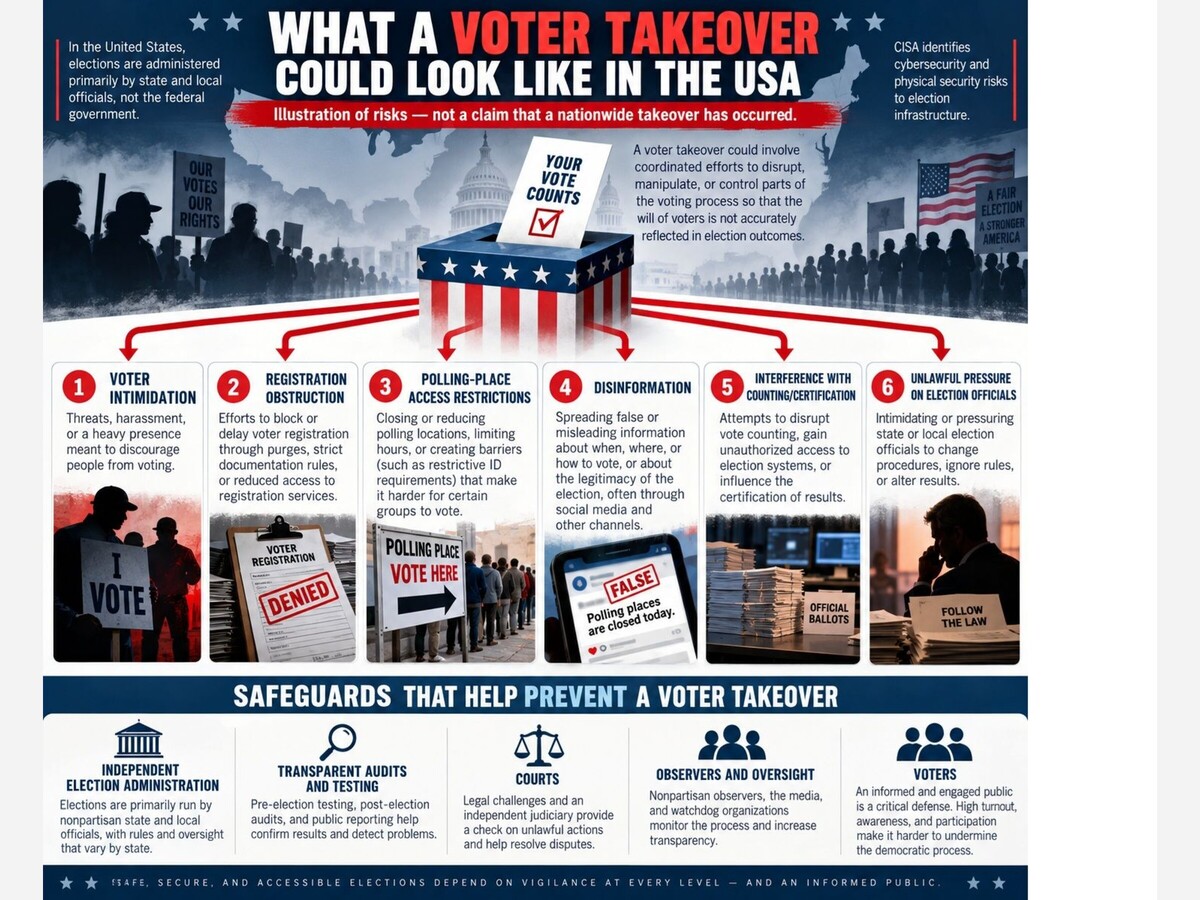
ICE's reported data-analysis activities are not, by themselves, proof of an ICE takeover of Georgia elections.
But they are documented grounds for investigating federal access to voter information and the safeguards governing its use.
###



Sunny, with a high of 78 and low of 58 degrees. Partly Cloudy during the morning, cloudy for the afternoon, overcast for the evening, clear overnight.