60° and Light rain
Image



FROM THE OFFICES OF LETICIA JAMES, New York Attorney General
This week, my office has been working to protect the health and rights of all New Yorkers.
We announced a lawsuit against Health and Human Services Secretary Robert F. Kennedy Jr. to protect children from dangerous vaccine rollbacks.
Secretary Kennedy’s anti-vaccine actions fly in the face of science and will leave thousands of children unprotected from harmful viruses.
Families deserve guidance grounded in science, and these abrupt changes put children’s health at risk.
We will keep fighting to protect our kids and make sure every family can trust the advice they get from their pediatrician.
###
Meanwhile, in Georgia ...
As of October 9, 2026, Georgia Governor Brian Kemp has not publicly announced a major new initiative specifically designed to protect Georgia's children from the changes to federal childhood vaccination policy under Health and Human Services Secretary Robert F. Kennedy Jr..
However, Georgia has maintained its existing childhood vaccination requirements, and the Georgia Department of Public Health continues to promote immunization and respond to measles outbreaks. There is an important distinction between what Kemp has personally done and what Georgia's public health agencies are doing.
1. Georgia has not abandoned its childhood vaccination requirements
Despite changes at the federal level, Georgia still requires children attending schools and childcare facilities to be immunized against 13 diseases, subject to legally recognized exemptions.
These include:
Georgia's requirements are established under state law and Department of Public Health regulations. These protections remain in effect even though federal officials have sought to reduce the number of vaccines universally recommended for children.
2. Measles is already spreading in Georgia
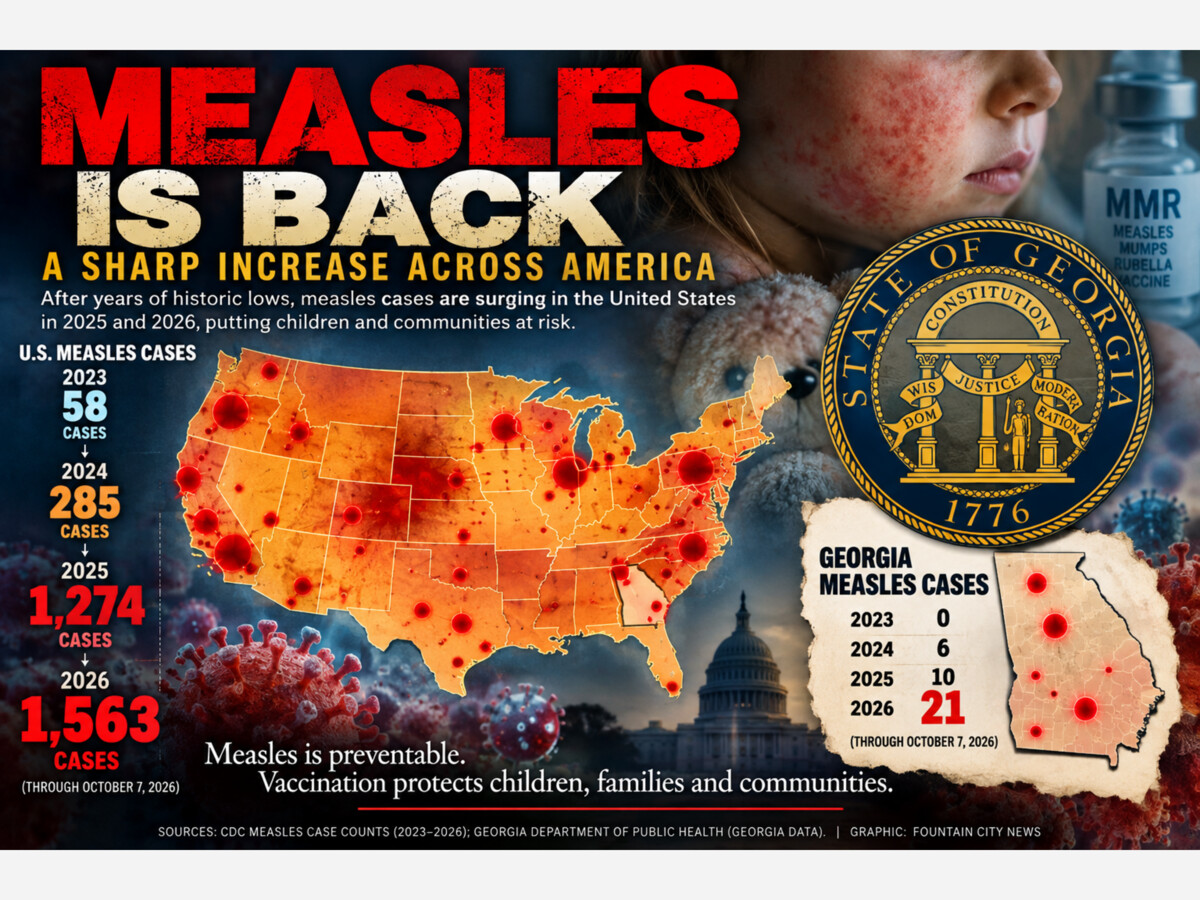
This is particularly concerning. According to the Georgia Department of Public Health, the state has reported:
| Year | Confirmed measles cases |
|---|---|
| 2023 | 0 |
| 2024 | 6 |
| 2025 | 10 |
| 2026 (through October 7) | 21 |
In September, Georgia confirmed five additional measles cases involving siblings in Jasper County. The children were either unvaccinated or incompletely vaccinated. Those cases were unrelated to an earlier outbreak associated with a Cobb County daycare.
Georgia public health officials are conducting exposure investigations and encouraging vaccination. This means Georgia is already experiencing an increase in a disease that vaccination can largely prevent.
3. What has Governor Kemp done about it?
Basically. nothing. He has NOT
That does not establish that Kemp has taken no action, it just means that existing state requirements continue to provide protection, but they largely predate the current controversy.
4. What is Kennedy actually changing?
Kennedy's department has pursued policies that reduce routine vaccination recommendations, which medical experts warn could increase the risk of outbreaks.
On January 5, 2026, federal officials announced a revised childhood immunization framework. In August, Donald Trump signed an "executive order" supporting fewer universal childhood vaccine recommendations and directing federal scrutiny of certain state vaccine mandates.
The changes affect recommendations for vaccines against diseases including hepatitis A, hepatitis B, influenza, rotavirus and meningococcal disease. Importantly, measles vaccination remains on the federal universal recommendation list.
Kennedy and administration officials argue that the revisions promote informed consent and bring American vaccination policy closer to practices in other developed countries. The American Academy of Pediatrics -and other medical organizations- have opposed the changes, warning that reducing routine recommendations could leave more children vulnerable to preventable diseases.
Some federal changes have also encountered legal challenges, including a preliminary court injunction in March.
5. Can Kemp protect Georgia's children independently of Washington?
Yes. Georgia retains substantial authority over its school vaccination requirements and public health programs. The state can maintain its immunization requirements even when federal recommendations change, although federal legal challenges could affect that authority.
Georgia can also fund vaccination programs, maintain disease surveillance, investigate outbreaks and issue state-specific public health guidance.
The Georgia Department of Public Health is already performing several of those functions. For example, during September's measles outbreaks, the department conducted contact investigations, notified potentially exposed individuals and continued recommending the MMR vaccine. Georgia also permits religious and medical exemptions, which means the state's school immunization requirements are not absolute.
6. Questions To Direct to Kemp and GPH Commissioner Kathleee Toomey
There is a significant public-policy question here:
Will Georgia maintain its established childhood immunization requirements regardless of federal changes, and will the governor commit the resources necessary to protect children against preventable infectious diseases?
That question deserves a clear answer, particularly given the increase in Georgia's measles cases.
The governor's administration should be able to explain whether it intends to preserve the current vaccination schedule, whether additional outbreak-response funding is needed, and how it will address potential conflicts between federal policy and state public health requirements.
Current Guidance through the Georgia Department of Public Health's School Vaccination Program and its Measles Surveillance Reports.
Georgia recorded 10 measles cases in all of 2025 and 21 during the first nine months of 2026.
That increase does not, by itself, establish that Kennedy's policies changes caused those infections; however, measles outbreaks can arise from several factors, including existing gaps in vaccination coverage and exposure through travel. Nevertheless, the increase makes the question of state preparedness particularly timely.
Ask yourself...
"As Washington retreats from some longstanding childhood vaccination recommendations, is Georgia taking additional steps to protect its children, or is the state relying entirely on protections already in place?"

Overcast, with a high of 72 and low of 60 degrees. Don't forget your umbrella! Overcast for the morning, moderate rain for the afternoon and evening, overcast overnight.







I just wanted to clarify that District Judge Richard Leon was in fact the first to tell tRump that he is a "steward"of the White House not the owner. And to treat it as such.